
Where is the water coming from? That question decides whether a water heater leak costs a little or a lot. Relief valves weep when they wear out or when household pressure runs high. Drain valves, especially the plastic ones found on many factory tanks, start dripping as they age. Fittings on top of the tank corrode where copper meets steel, and flexible connectors fail at the gasket. Condensation can mimic a leak convincingly on a gas unit or in a humid space. And sometimes the tank itself has rusted through. Across Muskegon, MI, we sort out which one you have before recommending a thing.
A leak call with us starts with evidence, not guesses. The technician dries everything off so fresh water shows where it starts, then checks the relief valve and its discharge line, the drain valve at the base, and every connection on top. On gas models we also inspect the burner compartment, because water there can be normal startup condensation or a sign of a tank that has failed. A relief valve that keeps releasing water triggers a pressure test: static pressure above roughly 80 psi, or a missing expansion tank on a closed system, will keep a new valve weeping. The fix follows the findings.
The repair depends on the diagnosis. Valve and fitting leaks are the good news: relief valves, drain valves, dielectric nipples, and flex connectors are stocked on our trucks, and we can often add an expansion tank or pressure-reducing valve the same day if pressure caused the problem. A leak from the tank body is the bad news, because steel that has rusted through cannot be repaired, and we will say so rather than sell a patch. Either way, we help limit future damage with a properly drained pan, a leak alarm or automatic shutoff, and a quick lesson on your shutoff valve. Call (231) 216-9674 to have your leak traced in Muskegon.
Our two most requested services are Water Heater Repair in Muskegon and Water Heater Replacement in Muskegon. Start there if you're not sure what you need.
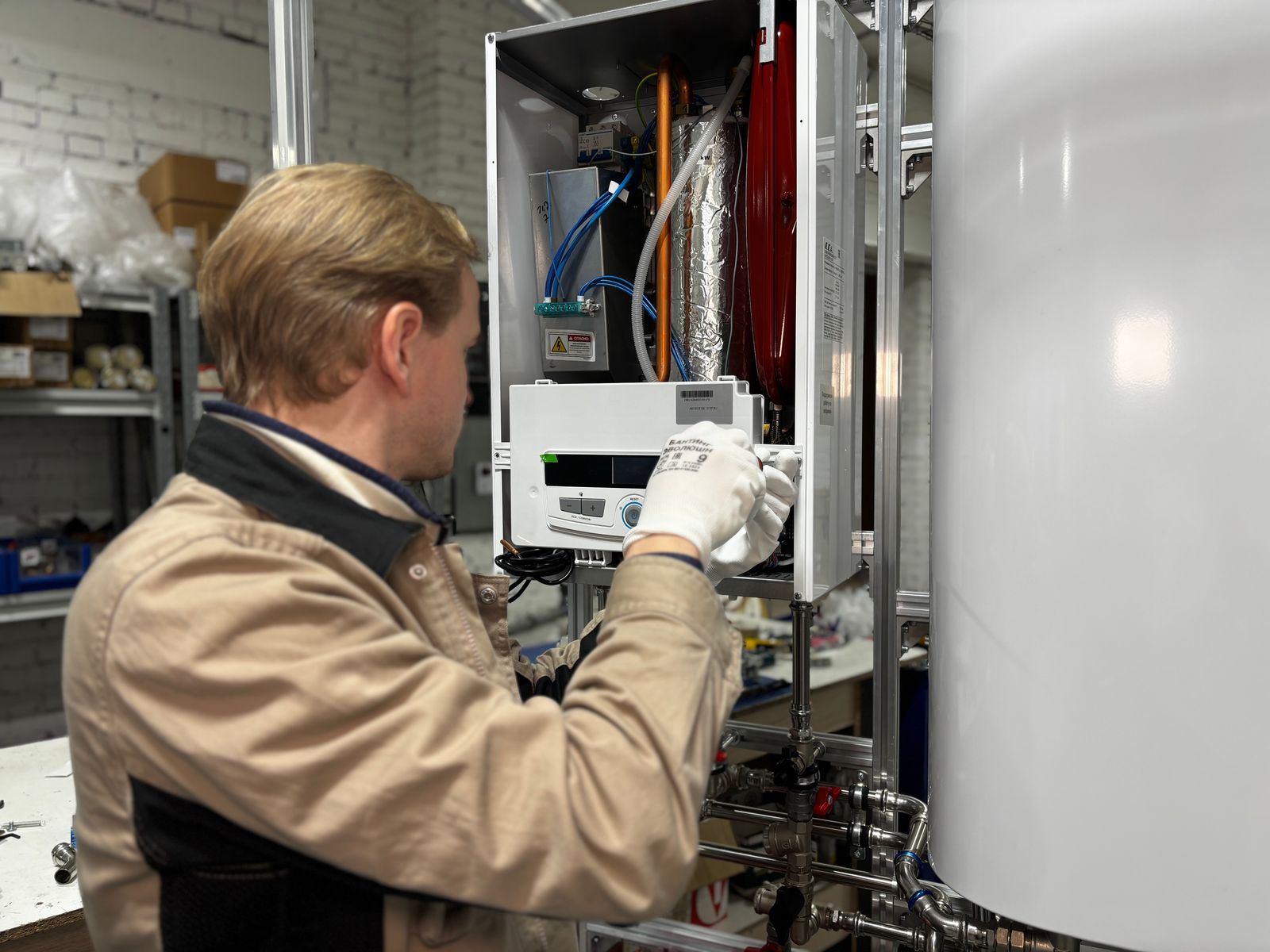
Signs You Need Water Heater Leak Repair in Muskegon
Water heaters usually give plenty of warning before they fail, as long as you know what to look and listen for. Keep an eye out for the following:
- A musty odor or soft floor around the heater location
- Mineral buildup or rust around the hot and cold connections
- Dampness in the combustion area of a gas unit
- A weeping drain spigot on the lower front of the heater
- Higher water use with no obvious explanation
- A puddle or damp spot on the floor around the base of the tank
- Rusty or discolored hot water paired with dampness at the base
- Water dripping from the relief valve or out of the end of its discharge pipe
Don't Wait for a Total Failure
Most water heater failures start small: a popping sound from sediment, a damp spot under the drain valve, or a shower that goes lukewarm a few minutes sooner each week. At the first hint of a problem, reach out to Muskegon Water Heater at (231) 216-9674 and we'll take a look.
Get Water Heater Leak Repair Handled Today
Call Muskegon Water Heater for fast, reliable service.
Tap to Call (231) 216-9674What Homeowners Ask Us Most
What a Trained Technician Brings to the Job
Reading a water heater leak correctly is harder than it looks. Water pooling at the base may start at a fitting on top and run down the jacket, and condensation on a cold tank can look exactly like a failure. Buying the wrong part is money down the drain, and overlooking a tank that is starting to go can lead to a much bigger flood later. There are safety concerns, too. The relief valve guards the tank against runaway heat and pressure, and blocking it to stop a drip can set up a violent failure. Tightening corroded fittings on an old tank can crack them, and electric heaters sit on 240-volt circuits that do not mix well with wet floors.
With a trained eye, the answer usually comes quickly. We rule out each possible source one by one, confirm it with fresh water on a dried surface, and measure static pressure so the fix actually lasts. Worn relief valves, weeping drain valves, and corroded connections are swapped the same visit, and pressure problems get a permanent fix, whether that is an expansion tank or a pressure-reducing valve. A rusted-through tank gets an honest replacement recommendation instead of a temporary fix, and we can add a piped drain pan and a leak sensor to protect your home going forward.
Step by Step: How a Visit Works
We follow the same careful process on every water heater, whether it's a quick thermostat swap or a full tankless conversion. Here's what you can expect when you choose Muskegon Water Heater:
Contain the Water
Before diagnosing, we isolate the heater, cut the gas or power, and contain any standing water so floors and walls stop soaking it up.
Pinpoint the Leak
We dry the tank and fittings, then check the relief valve and discharge pipe, the drain valve, the top connections, and the burner area in order.
Measure What Caused It
If a relief valve is involved, we measure static pressure and check for an expansion tank, since high pressure will ruin a new valve fast.
Fix and Confirm Dry
The faulty valve or fitting is replaced, the tank is refilled and bled of air, and we watch the connections under pressure until we are sure they are dry.
Repair or Replace? Let's Figure It Out.
Our technicians can assess your water heater and recommend the option that actually makes sense.
Tap to Call (231) 216-9674Water Heater Care Tips From Our Technicians
A little routine care goes a long way toward keeping a water heater running well past its expected lifespan. Put these technician-approved steps to work at home:
- Place the heater in a drain pan with a line to a floor drain or outdoors, especially above finished space
- Have the anode rod checked every few years; once it is used up, the tank starts to corrode
- Have household pressure measured, since high pressure wears out relief valves and fittings faster
- Annual flushing removes sediment that traps heat against the tank floor
- Put a water leak sensor on the floor next to the tank so a drip gets noticed early
- Make sure a closed plumbing system has a working expansion tank to absorb heated water
- Glance at the heater monthly for damp spots, rust, or crust on the fittings
Doing It Yourself vs. Hiring a Technician
The line between a safe DIY check and a risky repair is usually the moment you need to open a gas fitting, a vent connection, or an electrical cover. Here's a comparison:
| Consideration | DIY Attempt | Hiring a Pro |
|---|---|---|
| Finding the Source | Replace parts until the drip stops | Leak traced to its true starting point |
| T&P Valve | Valve swapped without checking why | Valve and pressure both addressed |
| Corroded Connections | Wrapped in tape and hoped for the best | Proper fittings installed and tested |
| False Alarms | Normal sweating treated as a leak | Only real problems get repaired |
| Water Damage | Floors left exposed to the next leak | Protection added where it matters most |
| Outcome | Temporary fix that may fail again | Confirmed dry repair or honest replacement advice |
Let's Get Your Hot Water Back
The sooner you call, the sooner the hot water is back. Reach Muskegon Water Heater for fast service.
Get Help: (231) 216-9674Where We Provide Water Heater Leak Repair
Our service area reaches well past the city limits. Choose your community for local details.